
Introduction
As sustainability becomes an increasingly important consideration for consumers and businesses alike, the demand for environmentally responsible products continues to grow. Around the world, people are seeking alternatives that combine functionality, aesthetics, and ecological responsibility.
Natural fibre products have emerged as one of the most promising solutions for supporting sustainable lifestyles. Made from renewable materials such as jute, seagrass, water hyacinth, bamboo, cane, and rattan, these products offer an attractive and practical alternative to many conventional materials.
From home décor and storage solutions to tableware and lifestyle accessories, natural fibre handicrafts are gaining popularity among environmentally conscious consumers who value both beauty and sustainability.
Understanding Sustainable Living
Sustainable living refers to making choices that help preserve natural resources and reduce negative impacts on the environment. It encourages individuals and businesses to adopt responsible consumption patterns while promoting long-term environmental and social well-being.
Today, sustainable living extends beyond energy conservation and recycling. It also influences purchasing decisions, interior design preferences, and the materials people choose for their homes and daily lives.
Consumers are increasingly seeking products that are:
- Renewable and responsibly sourced.
- Durable and functional.
- Biodegradable and environmentally friendly.
- Crafted with minimal environmental impact.
- Aligned with ethical and sustainable values.
As awareness continues to grow, sustainable living has evolved from a niche movement into a global lifestyle trend.
Why Consumers Are Seeking Eco-Friendly Alternatives
Modern consumers are becoming more aware of the environmental consequences associated with excessive consumption and non-renewable materials. This awareness has encouraged many individuals and organizations to embrace products that support healthier and more sustainable lifestyles.
Several factors are driving this shift:
- Increasing environmental awareness.
- Growing demand for sustainable home décor.
- Preference for renewable materials.
- Desire for authentic and handcrafted products.
- Support for ethical and responsible production.
Consumers are no longer focused solely on functionality. They are increasingly interested in the story, materials, and environmental impact behind the products they purchase.
Environmental Benefits of Natural Fibre Products
Natural fibre products provide numerous environmental advantages that make them an ideal choice for sustainable living.
Renewable Resources
Materials such as jute, seagrass, water hyacinth, bamboo, cane, and rattan are naturally renewable and can be replenished over time. Their availability helps reduce dependence on finite resources and supports more sustainable production systems.
Biodegradable Materials
Unlike many synthetic alternatives, natural fibres are biodegradable. At the end of their lifecycle, these materials decompose naturally, helping to minimize waste and reduce environmental pollution.
Lower Environmental Impact
Natural fibre products generally require fewer industrial processes and less energy during production compared to many conventional materials. Their renewable nature and environmentally responsible characteristics contribute to lower overall environmental impact and support more sustainable consumption patterns.
Popular Sustainable Materials
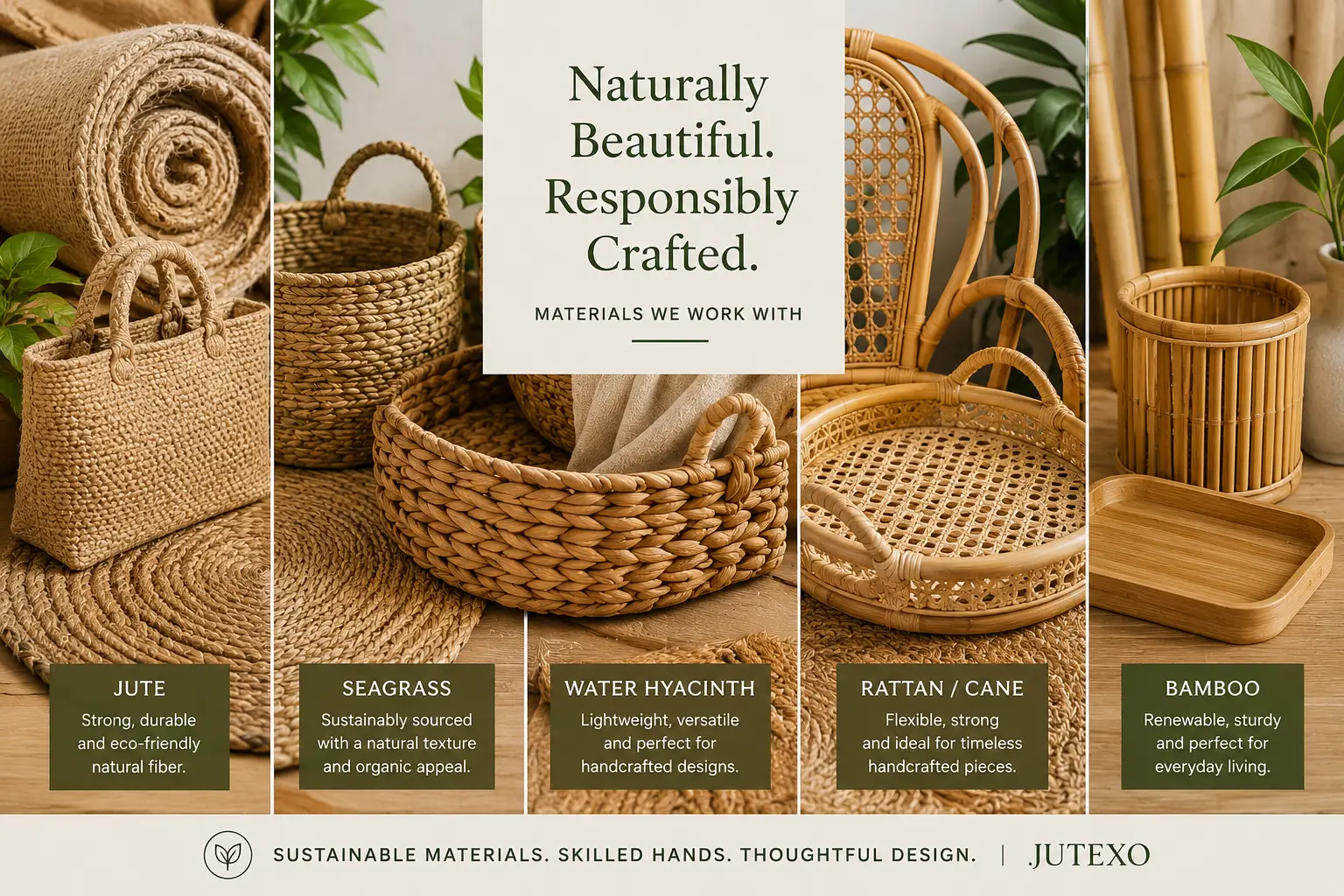
Natural fibre products derive their beauty and functionality from a variety of renewable materials that have been used for generations. Each material offers unique characteristics while contributing to environmentally responsible living.
Jute
Often referred to as the "Golden Fibre," jute is valued for its durability, texture, and versatility. It is widely used in rugs, bags, baskets, table mats, and decorative accessories.
Seagrass
Seagrass is appreciated for its soft texture and natural appearance. It is commonly used in storage baskets, laundry hampers, and home organization products.
Water Hyacinth
Water hyacinth has become increasingly popular due to its attractive woven texture and rustic charm. It is frequently used for baskets, trays, planters, and home décor accessories.
Bamboo
Bamboo is one of the fastest-growing renewable resources in the world. Its strength, lightweight properties, and versatility make it ideal for kitchenware, lighting, storage products, and decorative items.
Cane and Rattan
Cane and rattan are highly durable and flexible materials that are widely used in furniture, baskets, lighting, and premium home décor collections. Their timeless appeal makes them suitable for both traditional and contemporary interiors.
Learn more about the Sustainable Materials We Work With and discover how renewable resources contribute to environmentally responsible product development.
How Natural Fibre Products Reduce Plastic Dependency
The growing use of natural fibre products provides an opportunity to reduce dependence on synthetic and non-renewable materials. Consumers and businesses are increasingly replacing plastic-based products with eco-friendly alternatives made from renewable resources.
Natural fibre products can serve as sustainable alternatives for:
- Storage and organization solutions.
- Gift packaging and shopping bags.
- Home décor accessories.
- Tableware and serving trays.
- Lifestyle and utility products.
By choosing renewable materials, consumers contribute to reducing plastic waste and promoting more environmentally responsible lifestyles.
Handcrafted Products and Responsible Consumption
Sustainable living is not only about the materials used but also about encouraging thoughtful and responsible consumption. Handcrafted products embody values that support slower and more conscious purchasing decisions.
Unlike mass-produced goods, handcrafted products are appreciated for their:
- Authenticity and individuality.
- Timeless designs.
- Functional value.
- Long-lasting quality.
- Cultural significance.
These qualities encourage consumers to invest in products that provide lasting value rather than short-term convenience.
Supporting Artisan Communities
Natural fibre handicrafts help preserve traditional skills and provide income opportunities for artisan communities. By choosing handcrafted products, consumers and businesses contribute to sustainable economic development and cultural preservation.
The Importance of Traditional Craftsmanship
Traditional craftsmanship plays an important role in preserving cultural heritage while supporting sustainable production practices. Skilled artisans combine generations of experience with modern design concepts to create products that are both functional and aesthetically appealing.
By supporting handcrafted natural fibre products, consumers contribute to:
- Preserving traditional skills.
- Encouraging responsible production.
- Supporting artisan communities.
- Promoting sustainable economic development.
As global appreciation for authentic craftsmanship continues to grow, handmade products are becoming increasingly valued in premium home décor and lifestyle markets.
Sustainable Home Décor Trends
Modern consumers are increasingly embracing interior styles that emphasize simplicity, comfort, and sustainability. Natural textures and earthy tones have become essential elements of contemporary home décor, contributing to the growing popularity of natural fibre products.
Popular design trends supporting sustainable living include:
- Scandinavian interiors
- Minimalist design
- Japandi style
- Bohemian décor
- Coastal themes
- Biophilic and nature-inspired spaces
These trends encourage the use of renewable materials and handcrafted accessories that bring warmth, texture, and authenticity into living environments.
How Businesses Can Support Sustainability Through Product Choices
Businesses and brands also play a vital role in promoting sustainable lifestyles. Retailers, importers, and private labels are increasingly incorporating eco-friendly collections into their product portfolios to meet evolving consumer expectations.
Natural fibre products enable businesses to:
- Reduce dependence on synthetic materials.
- Support environmentally responsible sourcing.
- Meet sustainability initiatives and ESG goals.
- Offer authentic and premium handcrafted collections.
- Strengthen their brand image among eco-conscious consumers.
As sustainability becomes a long-term global priority, businesses that embrace renewable materials are well-positioned for future growth.
Explore our Product Catalogue to discover handcrafted collections developed for global buyers and eco-conscious brands.
Why Bangladesh Has a Natural Advantage
Bangladesh possesses abundant natural resources and a rich heritage of craftsmanship, making it an attractive sourcing destination for natural fibre products.
The country offers:
- Skilled artisan communities.
- Access to renewable raw materials.
- Strong traditions in weaving and handicrafts.
- Competitive manufacturing capabilities.
- Growing export expertise.
These advantages enable Bangladesh to contribute significantly to the global demand for sustainable home décor and lifestyle products.
Frequently Asked Questions
Why are natural fibre products considered sustainable?
Natural fibres are renewable, biodegradable, and generally have a lower environmental impact compared to many synthetic materials.
Are natural fibre products biodegradable?
Yes. Most natural fibres decompose naturally over time, helping reduce waste and environmental pollution.
Which materials are commonly used in sustainable handicrafts?
Jute, seagrass, water hyacinth, bamboo, cane, and rattan are among the most popular renewable materials.
Can natural fibre products replace plastic products?
In many applications, natural fibre products provide practical and environmentally responsible alternatives to plastic-based products.
Are handcrafted products more sustainable?
Handcrafted products often promote responsible consumption and support traditional craftsmanship while requiring fewer industrial processes.
Why is bamboo considered a renewable resource?
Bamboo grows rapidly and regenerates naturally, making it one of the most sustainable materials available.
Which markets have strong demand for sustainable products?
Europe, North America, Australia, and several Asian countries continue to experience growing demand for eco-friendly home décor and lifestyle products.
Can natural fibre products support ESG and sustainability initiatives?
Yes. Natural fibre products help businesses align with sustainability goals by utilizing renewable materials and promoting environmentally responsible consumption.
Why is Bangladesh suitable for natural fibre production?
Bangladesh offers skilled craftsmanship, abundant renewable materials, and strong export potential, making it a valuable sourcing destination.
Discover our Export Capabilities and learn how JUTEXO supports international buyers with quality-focused operations and worldwide shipment coordination.
Conclusion
Sustainable living is no longer simply a trend—it has become a global movement that is reshaping consumer preferences and business practices. Natural fibre products provide an effective way to embrace environmentally responsible lifestyles while maintaining functionality, beauty, and timeless appeal.
Materials such as jute, seagrass, water hyacinth, bamboo, cane, and rattan continue to gain recognition for their renewable characteristics and versatility. As demand for sustainable home décor and eco-friendly lifestyle products grows, natural fibre handicrafts are expected to play an increasingly important role in the future.
Looking for Sustainable Handcrafted Collections?
Explore JUTEXO's range of natural fibre and bamboo handicrafts and discover how environmentally responsible materials can support your business and sustainable living goals.
Crafted in Bangladesh. Designed for Global Markets.