Introduction
Natural materials have become increasingly important in modern home décor and lifestyle products. As consumers and businesses embrace sustainable living, materials such as bamboo, rattan, and seagrass have gained worldwide popularity for their beauty, functionality, and environmentally responsible characteristics.
Although these materials are often grouped together, each possesses unique properties that influence product design, durability, appearance, and applications. Understanding these differences enables retailers, importers, and private brands to make more informed sourcing decisions.
Why Material Selection Matters
Selecting the right material is an essential step in developing successful product collections. Different materials offer varying levels of strength, flexibility, texture, and aesthetic appeal.
Material selection influences:
- Product appearance.
- Durability and functionality.
- Customer preferences.
- Sustainability characteristics.
- Market positioning.
By understanding the strengths and characteristics of each material, brands can create collections that better align with consumer expectations and design trends.
Understanding Bamboo
Characteristics
Bamboo is one of the fastest-growing renewable resources in the world. It is lightweight, strong, durable, and naturally elegant, making it highly versatile for various applications.
Applications
Bamboo is widely used in:
- Kitchenware
- Lighting
- Storage products
- Decorative accessories
- Furniture
- Home organization products
Sustainability Benefits
Bamboo regenerates quickly and requires relatively few resources to grow. Its renewable nature and versatility make it one of the most environmentally responsible materials used in contemporary product design.
Understanding Rattan
Characteristics
Rattan is known for its strength, flexibility, and timeless appearance. Its natural texture and durability make it suitable for both traditional and contemporary interiors.
Applications
Rattan is commonly used in:
- Furniture
- Storage baskets
- Lighting fixtures
- Decorative accessories
- Home décor collections
Sustainability Benefits
As a renewable material, rattan supports sustainable production practices while offering excellent durability and long-lasting performance. Its versatility and aesthetic appeal continue to make it a popular choice in premium home décor markets.
Understanding Seagrass
Characteristics
Seagrass is appreciated for its soft texture, natural color variations, and relaxed appearance. It provides a warm and organic aesthetic that complements a wide range of interior styles.
Applications
Seagrass is commonly used in:
- Storage baskets
- Laundry hampers
- Home organization products
- Decorative accessories
- Planters
- Tableware and trays
Sustainability Benefits
Seagrass is a renewable and biodegradable material that contributes to environmentally responsible product development. Its natural appearance and versatility make it increasingly popular in sustainable home décor collections.
Explore the Sustainable Materials We Work With to learn more about renewable resources used in handcrafted collections.
Comparing Bamboo, Rattan and Seagrass
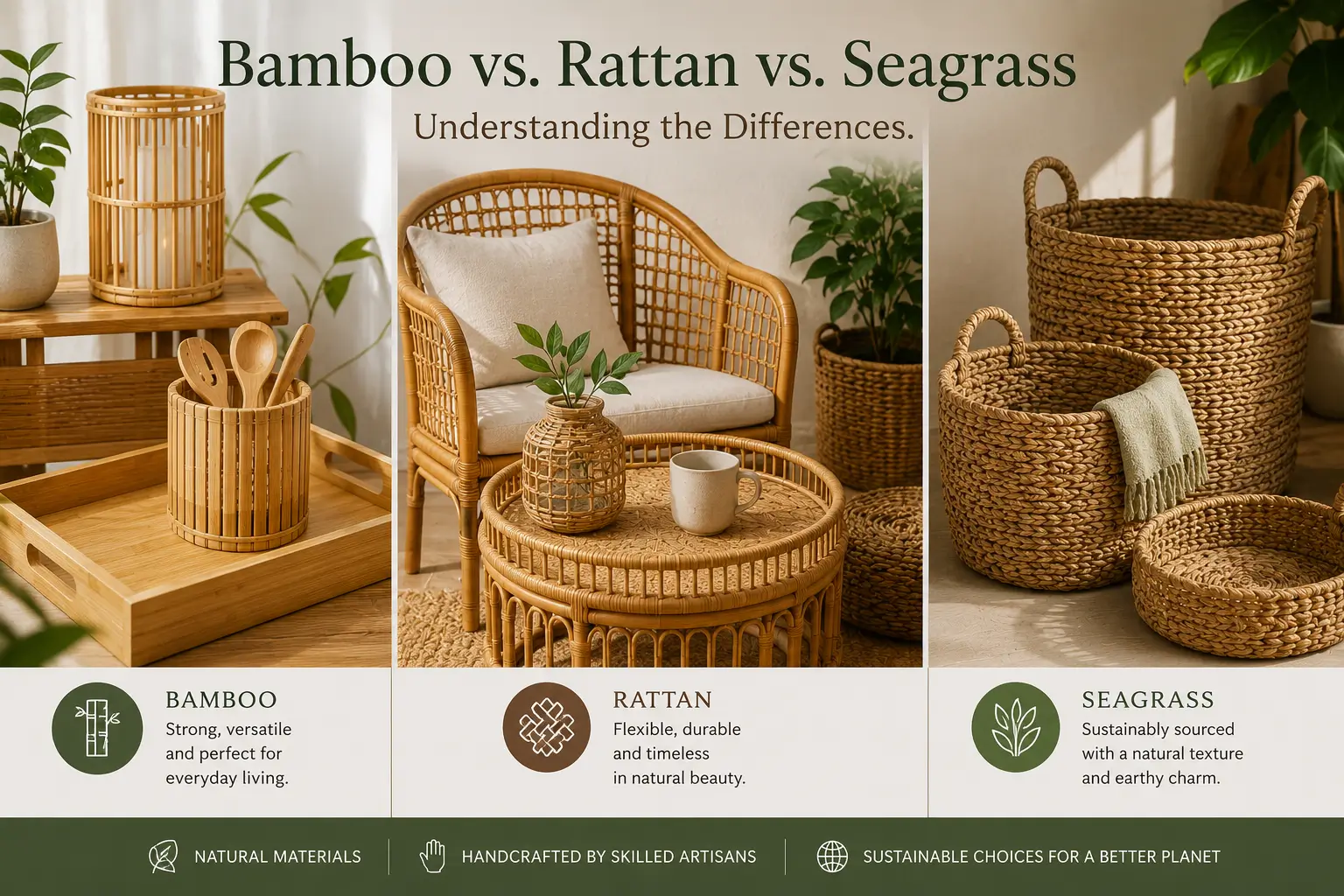
Although bamboo, rattan, and seagrass are all natural materials, they offer different characteristics and applications.
Appearance
- Bamboo provides a clean and contemporary appearance.
- Rattan offers a sophisticated and timeless aesthetic.
- Seagrass creates a warm and relaxed natural look.
Durability
- Bamboo is highly durable and strong.
- Rattan offers excellent durability and flexibility.
- Seagrass is durable for many lifestyle and storage applications.
Flexibility
- Bamboo is relatively rigid.
- Rattan is highly flexible.
- Seagrass offers moderate flexibility.
Weight
- Bamboo is lightweight yet strong.
- Rattan is lightweight and easy to shape.
- Seagrass is light and comfortable for everyday use.
Product Applications
- Bamboo is ideal for kitchenware, lighting, and furniture.
- Rattan is commonly used for furniture, baskets, and decorative products.
- Seagrass is especially suitable for baskets, hampers, trays, and home organization solutions.
Choosing the Right Material for Different Products
Selecting the appropriate material depends on the intended application, target customers, and desired design style.
Brands seeking modern and functional products may prefer bamboo. Those looking for timeless elegance and flexibility often choose rattan, while seagrass is particularly attractive for natural home organization and decorative collections.
Understanding these differences enables brands and buyers to develop product collections that combine functionality, aesthetics, and sustainability while meeting evolving consumer preferences.
Explore our Product Catalogue to discover baskets, trays, storage products, and home décor collections crafted from bamboo, rattan, and natural fibres.
Which Material Is Best for Your Brand?
Brands focused on modern kitchenware and contemporary designs may prefer bamboo. Those seeking premium handcrafted collections often choose rattan, while seagrass is especially suitable for storage and home organization products. Understanding your target market and product objectives helps ensure the right material selection.
Sustainability and Responsible Sourcing
As global awareness of environmental issues continues to grow, consumers and businesses are placing greater emphasis on sustainable materials and responsible sourcing practices. Bamboo, rattan, and seagrass are all renewable resources that contribute to environmentally responsible product development.
Responsible sourcing helps:
- Preserve natural resources.
- Promote sustainable production practices.
- Support artisan communities.
- Encourage long-term environmental stewardship.
By choosing products made from renewable materials, brands and consumers contribute to more sustainable lifestyles and responsible consumption patterns.
Why Natural Materials Continue to Gain Popularity
Natural materials have become increasingly popular due to their ability to combine beauty, functionality, and sustainability. Modern consumers appreciate products that offer authenticity, timeless design, and environmentally responsible characteristics.
Several factors contribute to this growing demand:
- Increasing awareness of sustainability.
- Growing preference for eco-friendly home décor.
- Rising appreciation for handcrafted products.
- Interior design trends favoring natural textures.
- Demand for renewable and biodegradable materials.
These trends are expected to continue supporting the popularity of bamboo, rattan, and seagrass products in global markets.
Frequently Asked Questions
Which material is the strongest?
Bamboo is widely recognized for its excellent strength and durability.
Which material is best for furniture?
Rattan and bamboo are particularly suitable for furniture due to their strength, durability, and versatility.
Which material is best for baskets?
Rattan and seagrass are both popular choices for baskets due to their flexibility and attractive natural appearance.
Which material is the most sustainable?
All three materials are renewable and environmentally responsible when sourced properly.
Are these materials biodegradable?
Yes. Bamboo, rattan, and seagrass are biodegradable natural materials.
Can these materials be customized?
Yes. Products can often be customized in terms of size, colors, finishes, and designs.
Which markets have strong demand for these materials?
Europe, North America, Australia, and several Asian countries continue to show strong demand for sustainable home décor products.
Are these materials suitable for premium products?
Yes. Their natural beauty and handcrafted characteristics make them highly suitable for premium home décor and lifestyle collections.
Why are natural materials becoming increasingly popular?
Consumers are seeking products that combine sustainability, functionality, and timeless design.
Discover our Export Capabilities and learn how JUTEXO supports international buyers through product development, quality-focused operations, and worldwide shipment coordination.
Conclusion
Bamboo, rattan, and seagrass each offer distinct characteristics and advantages. Understanding these differences helps retailers, importers, and private brands make informed decisions when developing product collections.
As sustainability and conscious consumption continue to influence global markets, natural materials are expected to play an increasingly important role in home décor and lifestyle industries. Choosing the right material ultimately depends on the desired functionality, aesthetic preferences, and target market requirements.
Looking for Sustainable Natural Material Collections?
Explore JUTEXO's bamboo, rattan, and natural fibre products and discover materials that combine beauty, functionality, and environmental responsibility.
Crafted in Bangladesh. Designed for Global Markets.